
LESSON DESCRIPTION
This video introduces the transistor, one of the most important semiconductor components in modern electronics and an essential device in laptop motherboard repair. Transistors are three-terminal components used primarily for electronic switching and signal amplification, enabling a small control current to manage a much larger load current.
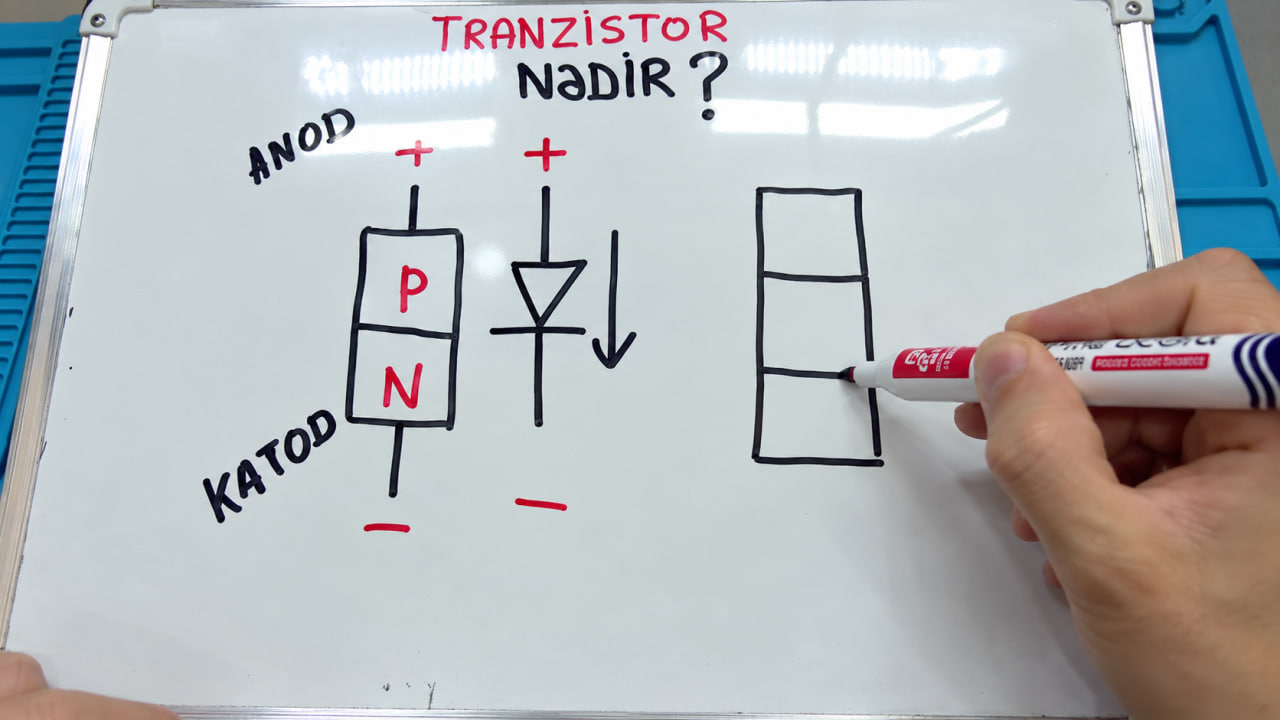
• Basic Transistor Structure: Learn how a bipolar junction transistor (BJT) is formed from two PN junctions and three semiconductor regions.
• NPN and PNP Transistors: Understand the two main BJT types, NPN and PNP, their internal structures, schematic symbols, and arrow directions.
• Collector, Base, and Emitter: Identify the three transistor terminals and understand their functions: the base controls the transistor, while the collector-emitter path carries the load current.
• Amplification and Switching: Learn the core transistor principle: a small base current can control a much larger current through the collector and emitter. This is why transistors are used to drive LEDs, motors, power-control circuits, and electronic signals.
• Circuit Connections: See typical NPN low-side and PNP high-side switching configurations, including the correct connections for the supply rail, ground, base, collector, emitter, and load.
• Base Resistors: Learn why a resistor must be used at the base terminal to limit base current and protect the transistor from excessive current.
• Transistor Packages: Explore larger through-hole transistors, metal tabs and heatsinks for high-power applications, and compact SMD transistors commonly found on laptop motherboards.
• Pin Identification and Datasheets: Understand why transistor pinouts are not universal. Learn to identify a transistor by its part number or SMD marking code, then confirm the emitter, base, and collector arrangement from the datasheet.
• Important Datasheet Ratings: Learn how to evaluate maximum collector-emitter voltage, maximum collector current, DC current gain (hFE), and collector-emitter saturation voltage before selecting a replacement transistor.
• Practical Breadboard Demonstration: Follow an NPN transistor LED-switching circuit and multimeter measurements that compare approximately 3 mA of base current with approximately 20 mA through the collector-emitter path, demonstrating transistor current gain in practice.
This video provides the foundation needed to recognize, test, and replace BJT transistors in laptop motherboards, adapters, power circuits, and other electronic devices.
• Basic Transistor Structure: Learn how a bipolar junction transistor (BJT) is formed from two PN junctions and three semiconductor regions.
• NPN and PNP Transistors: Understand the two main BJT types, NPN and PNP, their internal structures, schematic symbols, and arrow directions.
• Collector, Base, and Emitter: Identify the three transistor terminals and understand their functions: the base controls the transistor, while the collector-emitter path carries the load current.
• Amplification and Switching: Learn the core transistor principle: a small base current can control a much larger current through the collector and emitter. This is why transistors are used to drive LEDs, motors, power-control circuits, and electronic signals.
• Circuit Connections: See typical NPN low-side and PNP high-side switching configurations, including the correct connections for the supply rail, ground, base, collector, emitter, and load.
• Base Resistors: Learn why a resistor must be used at the base terminal to limit base current and protect the transistor from excessive current.
• Transistor Packages: Explore larger through-hole transistors, metal tabs and heatsinks for high-power applications, and compact SMD transistors commonly found on laptop motherboards.
• Pin Identification and Datasheets: Understand why transistor pinouts are not universal. Learn to identify a transistor by its part number or SMD marking code, then confirm the emitter, base, and collector arrangement from the datasheet.
• Important Datasheet Ratings: Learn how to evaluate maximum collector-emitter voltage, maximum collector current, DC current gain (hFE), and collector-emitter saturation voltage before selecting a replacement transistor.
• Practical Breadboard Demonstration: Follow an NPN transistor LED-switching circuit and multimeter measurements that compare approximately 3 mA of base current with approximately 20 mA through the collector-emitter path, demonstrating transistor current gain in practice.
This video provides the foundation needed to recognize, test, and replace BJT transistors in laptop motherboards, adapters, power circuits, and other electronic devices.