
LESSON DESCRIPTION
This video covers the fundamentals of resistors, one of the most critical components on any laptop motherboard. Understanding how these behave—and how they fail—is essential for accurate component-level diagnostics.
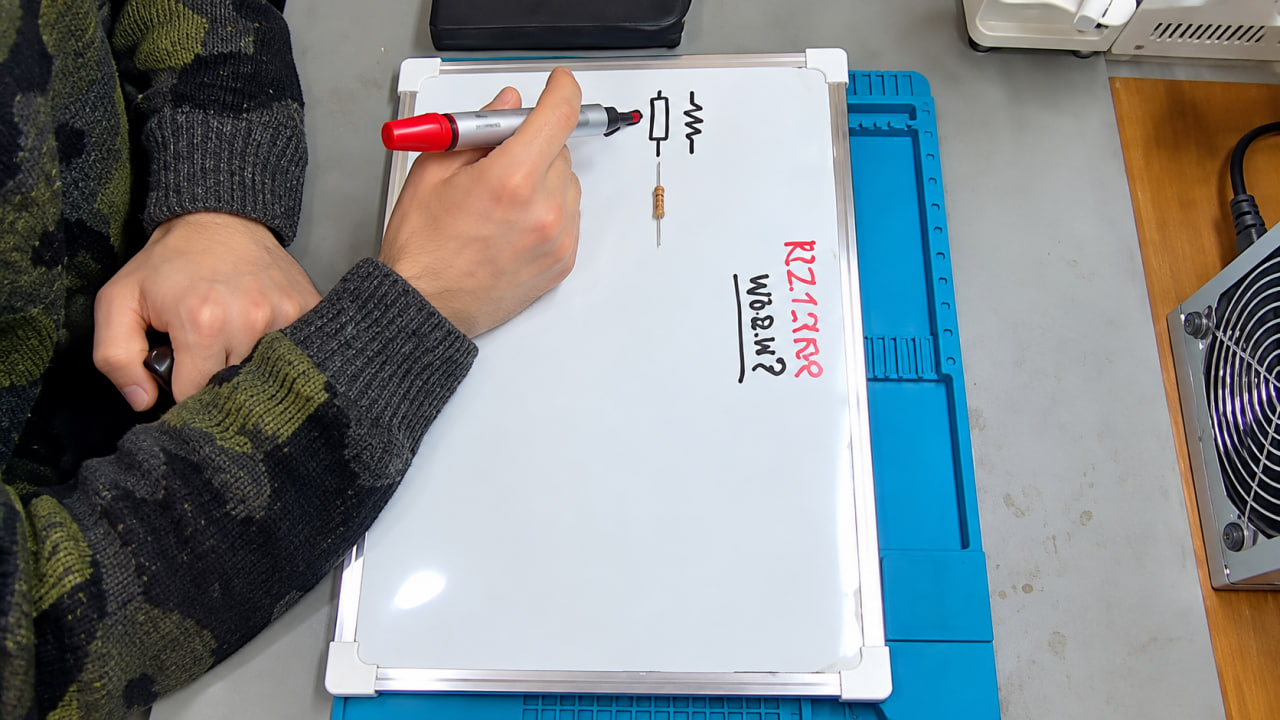
• Defining Resistors: Understanding their role as basic circuit elements, their symbol, and their relationship to Ohm’s Law.
• Types of Resistors: A breakdown of fixed resistors (Carbon, SMD, Fuse Resistors) versus variable resistors (Potentiometers, Trimpots, Thermistors/NTC/PTC, Varistors/VDR, and LDRs).
• Identification & Measurement: How to read values using color bands and printed codes, and practical tips for measuring them with a multimeter.
• Circuit Connections: Explaining Series vs. Parallel connections and how they impact total resistance.
• Voltage Dividers: How they are used on motherboards for signal conditioning, charger/adapter detection, and reference voltages.
• Pull-up & Pull-down Circuits: Why these are essential for stabilizing logic signals (High/Low) and preventing floating inputs in microcontroller-based motherboard circuits (like the power-on/startup signal).
• Troubleshooting: Why measuring a resistor’s value against the schematic is a vital step in isolating motherboard power-rail faults.
• Defining Resistors: Understanding their role as basic circuit elements, their symbol, and their relationship to Ohm’s Law.
• Types of Resistors: A breakdown of fixed resistors (Carbon, SMD, Fuse Resistors) versus variable resistors (Potentiometers, Trimpots, Thermistors/NTC/PTC, Varistors/VDR, and LDRs).
• Identification & Measurement: How to read values using color bands and printed codes, and practical tips for measuring them with a multimeter.
• Circuit Connections: Explaining Series vs. Parallel connections and how they impact total resistance.
• Voltage Dividers: How they are used on motherboards for signal conditioning, charger/adapter detection, and reference voltages.
• Pull-up & Pull-down Circuits: Why these are essential for stabilizing logic signals (High/Low) and preventing floating inputs in microcontroller-based motherboard circuits (like the power-on/startup signal).
• Troubleshooting: Why measuring a resistor’s value against the schematic is a vital step in isolating motherboard power-rail faults.